Fina-Kajsa
The EmigrantsFina-Kajsa is an elderly woman from Öland who crosses the Atlantic with her husband, Måns Jakob, to join their son in North America. Her story gives the emigrant voyage a domestic scale: she has left the farm where she spent her life, yet her attention remains fixed on her ailing husband, tending him through seasickness as the ship carries them toward an unfamiliar future. His death aboard the Charlotta turns their hoped-for reunion into a journey she must continue without him.
Departure and the promise of land
Fina-Kajsa and Måns Jakob are among the emigrants drawn by reports of abundant farmland in North America. Their son has written that the soil is deep and fertile and that broad plains could provide farms for people from Småland and Öland. He has taken up one hundred acres, and he pays for his parents’ passage. Fina-Kajsa listens to this promise with pride in her son, but the decision to leave is not simply her own desire: she had wanted to stay on their farm, while Måns Jakob became determined to go after receiving their son’s persuasive letter.
The promise is specific enough to make the journey imaginable, but not certain enough to erase her fears. Her son has also warned that some parts of America have a foul, unhealthy climate where emigrants die in large numbers. Måns Jakob is old and ailing, with a troubling pain in his heart; he has never moved from the farm where he was born. Fina-Kajsa knows the risk of undertaking a sea voyage at their age, and later wonders whether the remaining span of their lives will be long enough to reach their destination.
Life aboard the Charlotta
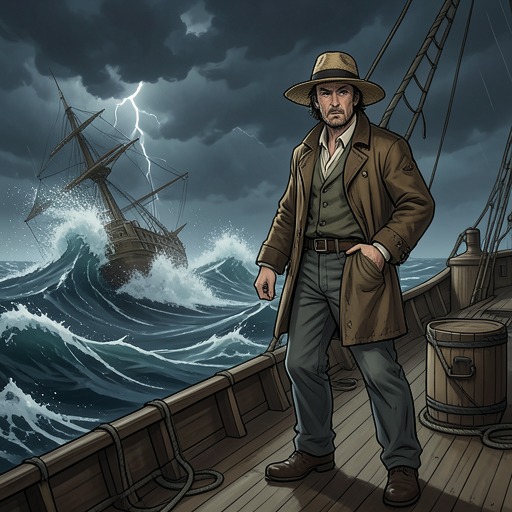
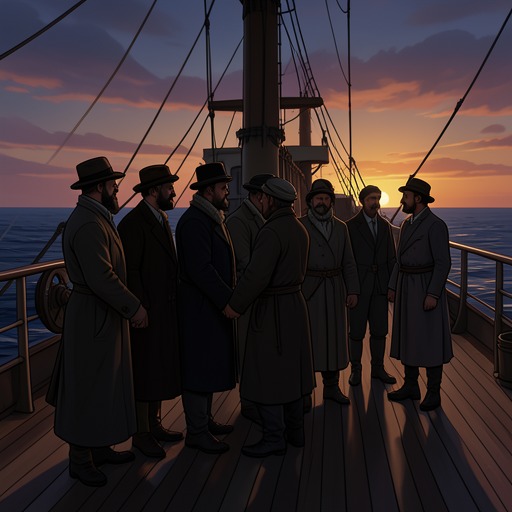
At the meeting point at Åkerby Junction, Fina-Kajsa travels with Måns Jakob in the party led from Kärragärde by Danjel Andreasson. She and her husband are two among sixteen emigrants—nine adults and seven children—who assemble there before continuing toward Karlshamn. The Charlotta departs Karlshamn on April 14, 1850, bound for New York with seventy-eight emigrant passengers aboard, as well as its crew and cargo.
The ship’s crowded hold makes ordinary care difficult. Its berths and belongings leave little room to move, and the passengers must clean their quarters before receiving their daily water. Each person is allotted half a gallon for drinking and washing; that ration must also serve for preparing food and washing babies. Fina-Kajsa is among the passengers who endure these conditions not as an abstract inconvenience but as part of the daily work of surviving the crossing. The novel’s account of the hold’s cramped space and shared chores sets the conditions for the illness that overtakes her and Måns Jakob.
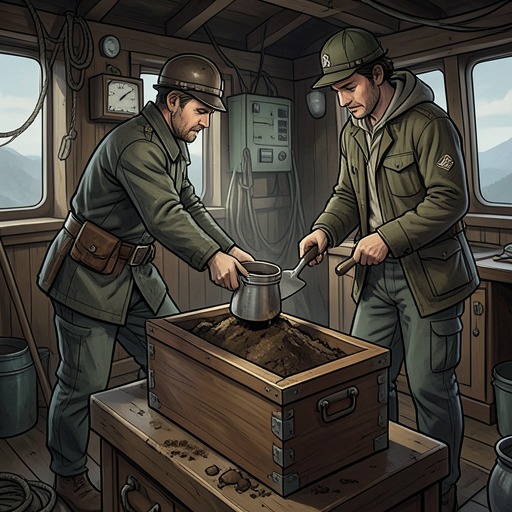
Fina-Kajsa and Måns Jakob are described as carrying more Swedish dirt than any other passengers. Their homemade knapsack is made from old gray sailcloth, its ends fastened to pieces of board and held apart by narrow wooden laths. The details distinguish the couple’s worn, practical belongings from the carefully packed provisions and bedding around them, while placing them firmly among the rural people whose migration begins with what they can carry.
Care for Måns Jakob
When seasickness confines the couple to their bunk, Fina-Kajsa remains clear-minded despite her own weakness. They lie on a worn mattress whose straw pricks like spears. Måns Jakob is the more severely ill: he shakes as if feverish, does not answer when spoken to, and moans. In delirious speech he worries about the grindstone he is taking to their son, imagining that it has broken and become useless. Even in this state, the object he means to bring across the ocean remains fixed in his thoughts.
Fina-Kajsa tends him as best she can, wiping the perspiration and trails of snuff from his face with a piece of cloth. His familiar habit of using snuff had been bound up with his belief that it eased the pain in his heart; now its dark traces run down his face as she cares for him in the crowded bunk. The practical gesture of wiping him down makes her devotion visible without separating it from the unpleasant physical facts of sickness.
Danjel Andreasson has been explaining the story of Jesus calming the storm to the passengers. Fina-Kajsa listens and then speaks to him about the choice to emigrate. She says that she and Måns Jakob should never have attempted the voyage: after more than sixty years of walking safely on land, they ought to have stayed there. Her words bring the distance between religious reassurance and bodily suffering into the same scene. She does not claim to know whether their hardship is God’s will; she says that, if she faced God at that moment, she would not be afraid, because she had long ago confessed her sins.
Måns Jakob’s death
A few days later, Fina-Kajsa wakes and shakes her husband’s shoulder, as she has done on other mornings. When he does not respond, she shakes him harder, but still refuses to believe that he is dead. She explains that his heart has stopped before and taken time to start again, and that he has always been a heavy sleeper during their more than forty years of marriage. Convinced he will awaken if she and Danjel shake him together, she asks for help rather than accepting the finality of what she sees.
Danjel and the other passengers know that Måns Jakob cannot be awakened. No one can establish the cause of death: some suspect his failing heart, while Karl Oskar considers whether he may have choked on his vomit after being found face down. The uncertainty leaves Fina-Kajsa with no clear explanation to resolve the shock of his death. The man who had insisted on going to their son is gone before the promised farmland can be reached, and the wife who had wanted to remain at home must face the rest of the voyage without him.
Narrative significance
Fina-Kajsa’s brief but fully embodied arc sets the optimistic language of emigration against its human cost. The son’s report of fertile plains and the couple’s hope of seeing the land he owns are carried alongside an old man’s heart trouble, a grindstone meant as a gift or practical possession, a cramped bunk, and the wife’s repeated attempt to rouse him. The destination remains a promise; the crossing is the immediate reality.
Her role is not to resolve the voyage’s religious questions but to make them intimate. Listening to Danjel’s account of faith in a storm, she measures doctrine against the suffering of two old people who left the security of their farm. Her composure and care persist even as she voices regret and fear. When Måns Jakob dies, the narrative’s focus on her refusal to believe him dead gives the loss its force: migration has separated the couple from home, and death now threatens to separate them from each other before they reach the place that drew them across the ocean.